
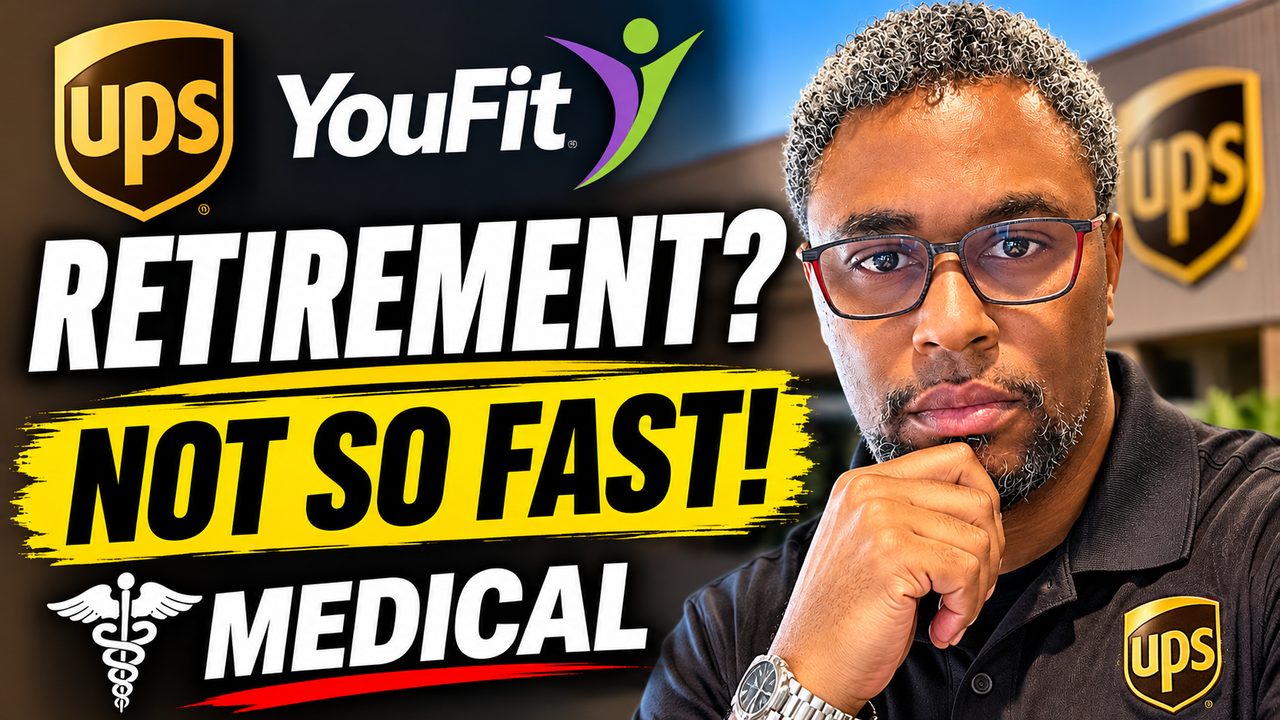
Retiring From UPS at 55? Not So Fast. Check Your Health Insurance First
Eligible to retire from UPS at 55? Not so fast. Medicare does not start until 65, and I pay about $700 a month for health insurance. Do this math before you retire.

Sammy Beaugard
If you work at UPS and you just hit 55, or you are getting close, you are probably thinking about retirement. Before you put in your papers, find out exactly what your health insurance will cost you every month. Being eligible to retire doesn’t mean you’re ready to retire. Medicare doesn’t start until 65, and until then the medical bill is on you. I learned that the hard way after almost 30 years at UPS, and today I pay around $700 a month for health insurance. If I’d known that number ahead of time, I would have stayed.
Key takeaways
- Eligible is not the same as ready. Hitting your years or your age at work only means you're allowed to leave.
- Medicare starts at 65. Retire earlier and you need to cover the gap yourself.
- Retiree credits help, but they're not free coverage. Mine go toward the premium, and I still pay out of pocket.
- Do the math first. Compare your monthly insurance bill to what another year or two of work would pay you.
- Have a plan for the gap. Keep working longer, or build income that covers the bill before you leave.
My story: retiring from UPS the moment I was eligible
I spent almost 30 years in logistics, most of it in UPS management. When I hit retirement eligibility, I did what a lot of people do. I said, "I put in my time. I'm done."
What I didn't sit down and figure out was the medical. In my head, retirement meant my health insurance would be taken care of. It isn't. You get credits toward your premium, and that's a help, but the credits don't cover the whole thing. The rest comes out of your pocket every single month.
For me, that's about $700 a month. That's $8,400 a year, just to keep health insurance until Medicare kicks in.
I'm going to be honest with you. If somebody had sat me down and shown me that number before I left, I would still be working at UPS right now. I would have stayed until I was closer to Medicare age and let the job carry my insurance.
Why "eligible to retire" doesn't mean "ready to retire"
Your company tells you when you can retire. It doesn't tell you whether you should.
Eligibility is about your years of service and your age. Being ready is about your money: your pension, your savings, your Social Security timing and, the one people forget, your health insurance.
Most people plan for the paycheck going away. Very few plan for the insurance bill showing up. When you're working, your employer covers a big part of your coverage and you barely notice it come out of your check. The day you retire, that changes.
What happens to your health insurance when you retire before 65?
Here's the gap in plain words: Medicare starts at 65. If you retire at 55, 58 or 60, you've got years to cover on your own.
Your options usually look something like this:
- Retiree medical from your employer. Some companies, like mine, give you credits toward a premium. Check exactly what those credits cover and what's left for you to pay.
- COBRA. You can usually keep your work plan for a while after you leave, often up to 18 months, but you pay the full cost yourself, and it ends before 65 if you retire early.
- A plan from the Health Insurance Marketplace. You can shop for your own plan at healthcare.gov. What you pay depends on your income, your age and where you live.
- A spouse's plan. If your husband or wife still works and has coverage, getting on their plan can be the cheapest move.
Every one of these costs something. The question is how much, and whether you can carry it for the years until 65.
Do this math before you retire
This is the step I skipped. Don't skip it. Grab a piece of paper and write these down:
- Your monthly health insurance cost after retirement. Not the credit, the amount you pay. Call your benefits office and get the real number.
- How many months until you turn 65. Multiply that by your monthly cost. That's your total gap.
- What you'd earn by working one or two more years. Include the paycheck and the insurance your job pays for.
- Compare the two. If staying a little longer covers most of that gap, staying may be the smarter move.
When I ran my own numbers after the fact, $700 a month for years was a big piece of my retirement money going straight to an insurance company. Staying would have kept that money in my pocket.
When it makes sense to wait for Medicare
Waiting until you're closer to 65 can make sense when:
- Your monthly insurance cost would eat a big part of your pension.
- You don't have a spouse's plan to get on.
- You still like your job well enough, or it's not breaking your body down.
- You're only a few years away from Medicare anyway.
Retiring early can still be right for you. Maybe your health, your family or your sanity says it's time to go. Just go with your eyes open and the number written down.
What I'm doing about it now
I can't go back to UPS, so I had to make a plan for the gap. I do some delivery work, and I've been building income online since 2012. These days most of my time goes into blogging. I write posts like this one so people who are searching for answers can find me on Google.
That's why I built GoBeaug, a simple blogging system for everyday people. You write about what you know and what you've lived through, and your posts can bring visitors to you while you sleep. You don't need to be a tech person. If you're thinking about retiring, or you already did and the bills are bigger than you planned, building something of your own on the side is one way to help cover the gap.
If you want more ideas, I also wrote about simple ways to earn extra money in retirement at 50+.
Frequently asked questions
Is health insurance free when you retire from UPS?
Not in my experience. UPS gave me credits toward my premium, but I still pay part of the cost out of pocket every month. Ask your benefits office for the exact amount you'll pay before you retire.
When does Medicare start?
Medicare starts at 65 for most people. If you retire before then, you need another way to cover yourself until you turn 65.
How much does health insurance cost if you retire early?
It depends on your plan, your age, your income and where you live. For me, after my retiree credits, it's about $700 a month. Get your own real number before you decide.
Should I keep working until 65 for the health insurance?
It depends on your situation. Compare what you'd pay for insurance until 65 with what you'd earn by staying. For a lot of people, working a year or two longer saves a lot of money.
What are my health insurance options if I retire before 65?
Common options are retiree coverage from your employer, COBRA for a limited time, a plan from the Health Insurance Marketplace at healthcare.gov, or getting on a working spouse's plan.
The bottom line
Before you even think about retiring, think about your medical. Find out what you'll pay every month, count the months until 65 and do the math. I wish somebody had told me that before I walked out the door at UPS. Now I'm telling you.
If you're over 50 and want to build some income of your own to cover the gap, take a look at GoBeaug.
Are you thinking about retiring early, or did you already do it? Did the health insurance cost surprise you? Tell me in the comments.
This is my own story, not financial or insurance advice. Your costs and options depend on your plan and situation. Results vary with any side business, and many people earn nothing.
Keep reading
- Daily Income MethodHow to Make YouTube Shorts Without Showing Your Face
You can make YouTube Shorts without showing your face by using text, voiceover, your hands or screen recordings over simple footage, on a schedule you can keep.
- MotivationThe Hill Always Looks Steepest Right Before the Top
Thinking about quitting your side hustle or online business? If it's getting hard, you might be getting close. Sammy shares what 2012 to today taught him about not looking back.
- Getting Started6 Questions to Ask Before You Join Any Online Program
Before you join any online program, ask these 6 questions about what you get, the real cost, how the money is made, deadlines and refunds.
- MotivationEric Thomas: Master the Way That Works Before Your Own Way
Eric Thomas's short video on mastering the way that already works before doing it your way, and what it means for beginners building something online.



Loading comments…