

How to Make YouTube Shorts Without Showing Your Face
You can make YouTube Shorts without showing your face by using text, voiceover, your hands or screen recordings over simple footage, on a schedule you can keep.

Sammy Beaugard
Disclosure: Some links in this post are my referral links. If you join through them, I may earn a commission at no extra cost to you.
Yes, you can make YouTube Shorts without showing your face. Most faceless Shorts are just on-screen text, a voiceover, your hands, or a screen recording laid over simple footage, and the real secret is a small routine you can repeat, not a camera. Below I'll show you how to do it for free first, and then where a training like Daily Income Method fits if you want more structure.
Why making YouTube Shorts without your face feels so hard
Most people who never start get stuck on the same few things:
- Camera shyness. You think every Short needs your face, so you put it off.
- No idea what a faceless video even looks like. You have seen faceless channels, but you don't know how they are put together.
- Starting from zero every time. One Short takes all evening.
- No routine. You post three videos in one burst, then nothing for a month.
None of that means you can't do this. You just need a format and a habit.
Faceless YouTube Shorts ideas that work for beginners
The most common ways to make Shorts without being on camera (pick one or two):
- Text on footage. A short tip or list written on screen over calm stock footage or your own clips of a walk, a kitchen or a workspace.
- Voiceover. Your voice (or a clear text-to-speech voice) explaining one idea while footage plays.
- Hands only. Film your hands cooking, writing, building, cleaning or using a phone. People like watching a task get done.
- Screen recordings. Show a quick how-to on your phone or computer screen, one step at a time.
Free tools cover all of this: YouTube's own app, CapCut and Canva. Once your videos are made, my guide on where beginners can share their links covers the next step.
How to make Shorts consistently (a simple routine)
Tools are rarely the problem. Consistency is. Here's a routine to start this week:
- Pick one topic. Something you know or want to learn, for a specific group of people. Keep it narrow so viewers know what to expect.
- Choose three formats and rotate them. For example: a quick tip, a common mistake, and a short reminder. Rotating kills the blank-page problem.
- Write the hook first. The first line on screen has to give people a reason to keep watching. "Three mistakes beginners make with..." beats "Hi everyone."
- Batch your work. Write five hooks in one sitting, gather footage in another, and edit in a third. That's how busy people keep posting.
- Pick a pace you can keep. One Short a day you can keep is better than five a day for one week and then nothing.
Free help is scattered, though, and piecing it into one plan is where many of us quit.
How to make money on YouTube Shorts (the honest version)
Many people find my site searching "how to make money on YouTube Shorts" or "how to make money with short videos." Here is the plain answer.
YouTube pays creators through the YouTube Partner Program. As listed on YouTube's help pages when I wrote this, there are two levels:
- The expanded level: 500 subscribers, 3 valid public uploads in the last 90 days, and either 3,000 qualified watch hours in the last 12 months or 3 million qualified Shorts views in the last 90 days. This opens features like fan funding, not ad revenue.
- Full ad revenue sharing: 1,000 subscribers, plus either 4,000 qualified watch hours in the last 12 months or 10 million qualified public Shorts views in the last 90 days.
Those are big numbers, and most channels never reach them. YouTube can also change the rules, so check the official YouTube Partner Program page before you plan around them. Many people use Shorts mainly to get seen and send viewers to a page, like a simple capture page, rather than counting on YouTube to pay them.
How Daily Income Method helps with faceless short videos
Daily Income Method is faceless short-form video training. I joined it for its short-form video strategy for TikTok and Facebook Reels, and I joined for the training, not the pay plan. The same habits carry over to YouTube Shorts.
Here is how its listed member features line up with the problems above (as listed on the official site when I wrote this):
- No idea what to make: a 100,000 short-form video template library, so you're not starting from a blank screen.
- Stuck on the first line: an AI hook, script and content generator to help you write the hook and the words that follow.
- Scattered free tutorials: a social media content training library in one place.
- No one to ask: a private members community.
You can see it on my Daily Income Method page. Check the official site for the current details before you buy.
Who it fits, and who should choose something else
It may fit you if:
- You want to post short videos without showing your face.
- You learn better from one organized training than from random free videos.
- You want ready-made templates and hook help so you can post more consistently.
You may want something else if:
- You haven't made a single Short yet. Make five free ones first.
- The cost would stretch your budget. Free tools and the routine above are a real, honest option.
- You're hoping it will make money for you. No training can promise that.
Quick facts
- What it is: faceless short-form video training for TikTok, Facebook Reels and similar platforms.
- Cost: $297 total at checkout as listed ($200 plus a $97 admin fee).
- What you get (as listed): a content training library, an AI hook and script generator, a 100,000 short-form video template library, and a private members community.
- Who it's for: beginners who want to make short videos without being on camera.
- Pay plan: it lists $200 commissions for referrals. Results vary, and many people earn nothing.
Frequently asked questions
Can you make YouTube Shorts without showing your face?
Yes. Text on footage, voiceovers, hands-only clips and screen recordings are all common faceless formats. Many Shorts channels never show a face at all.
How do you get paid from YouTube Shorts?
Through the YouTube Partner Program. As listed by YouTube when I wrote this, Shorts ad revenue sharing needs 1,000 subscribers plus 10 million qualified public Shorts views in the last 90 days (or 4,000 watch hours in 12 months). Most channels never reach that, so don't count on it.
Do faceless Shorts need affiliate disclosures?
If you share referral links, yes. I explain it in my post on whether you have to disclose your affiliate links.
Do I need Daily Income Method to make faceless Shorts?
No. You can start with free tools and the routine above. Training like this is for people who want templates, hook help and a community in one place.
Your turn
If you want a guided path for faceless short videos, you can look at Daily Income Method here. Either way, start with one topic and three formats this week.
What's stopping you from posting your first faceless Short? Tell me in the comments.
Results vary. Your results depend on your own effort, skills and situation, and many people earn nothing.
Keep reading
- Daily Income MethodDon't Know What to Post on Facebook Reels? A Simple Faceless Plan
Stuck on what to post on Facebook Reels or TikTok? Here's an honest, simple plan for faceless short videos, plus where Daily Income Method fits.
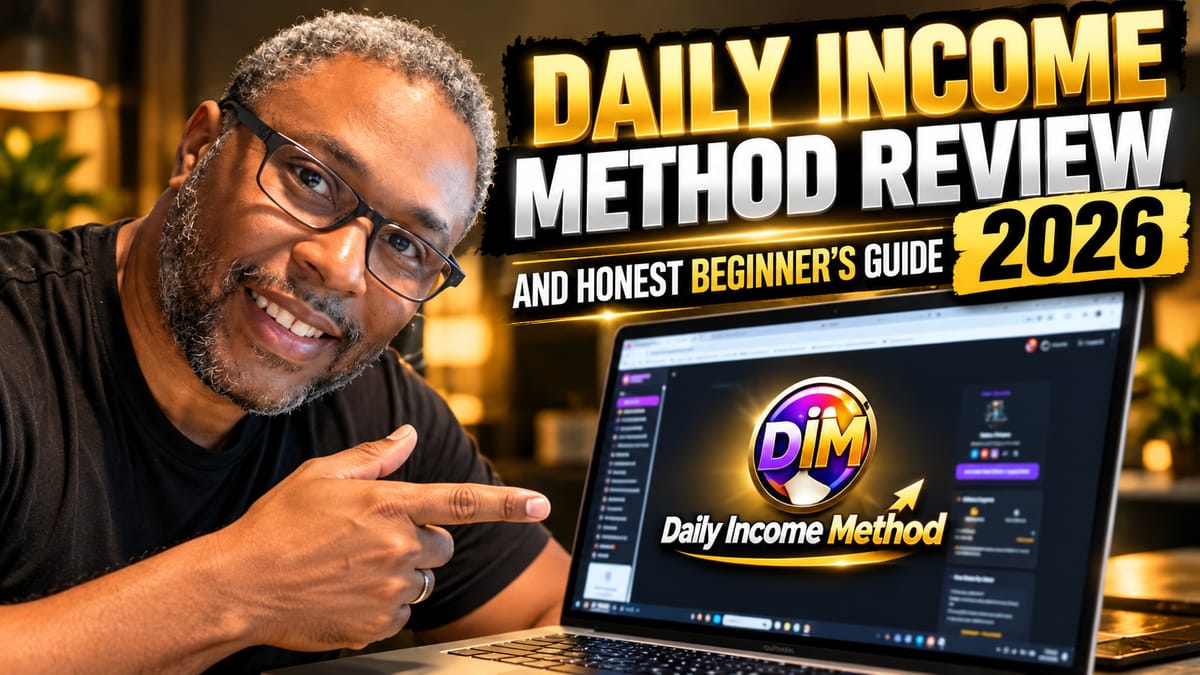
- Daily Income MethodDaily Income Method Review 2026: An Honest Beginner's Guide
An honest beginner's review of Daily Income Method: what the faceless short-form video training includes, what it costs, and how its pay plan works.
- Lead LightningCamera Shy? How to Make Videos Without Showing Your Face
Camera shy but need video to market online? Honest faceless video options, plus how the $7 Lead Lightning AI Twin tool may help beginners.
- Video MarketingHow to Make Faceless Short Videos as a Beginner
Faceless short videos for beginners, step by step: hooks, screen recordings, b-roll, voiceover or AI voice, captions and posting consistently.

Loading comments…